Image+Nation
Gondola

Gondola

VEIT HELMER | GERMANY + GEORGIA | 2023 | 86 MIN | NO DIALOGUE

VEIT HELMER | GERMANY + GEORGIA | 2023 | 86 MIN | NO DIALOGUE

FeatureCOMPETITION

Presented by

Goethe Institut

Synopsis

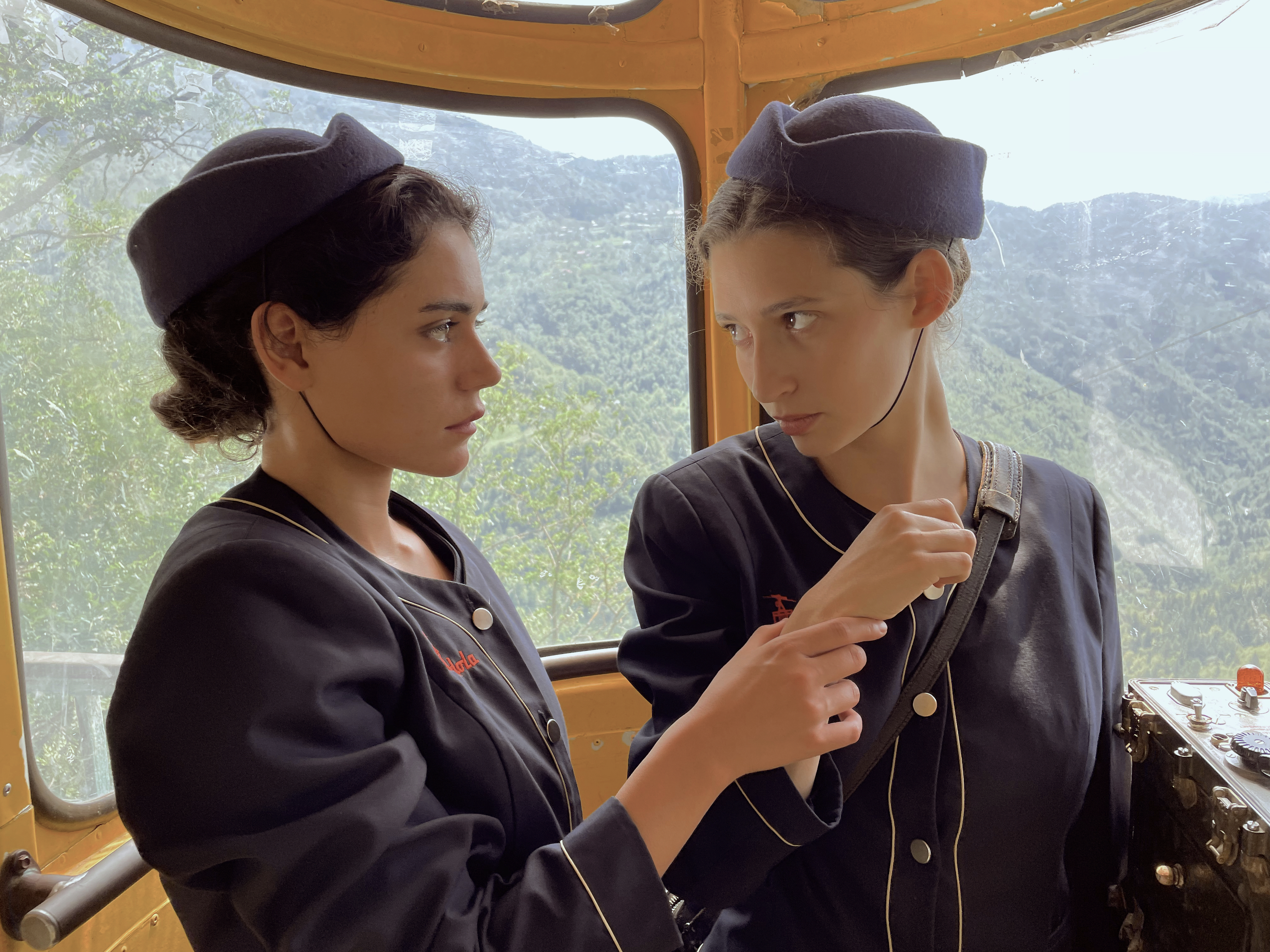
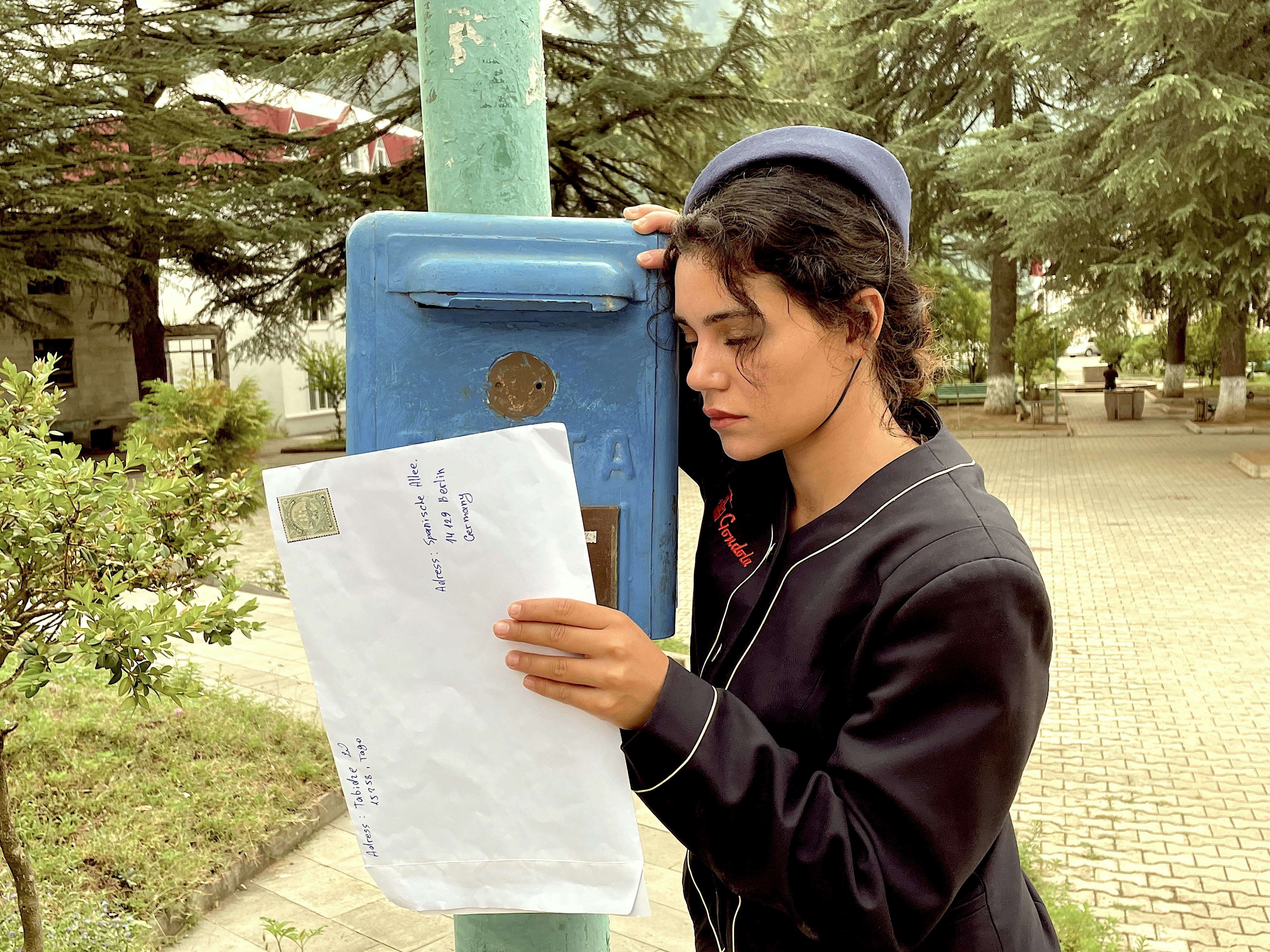
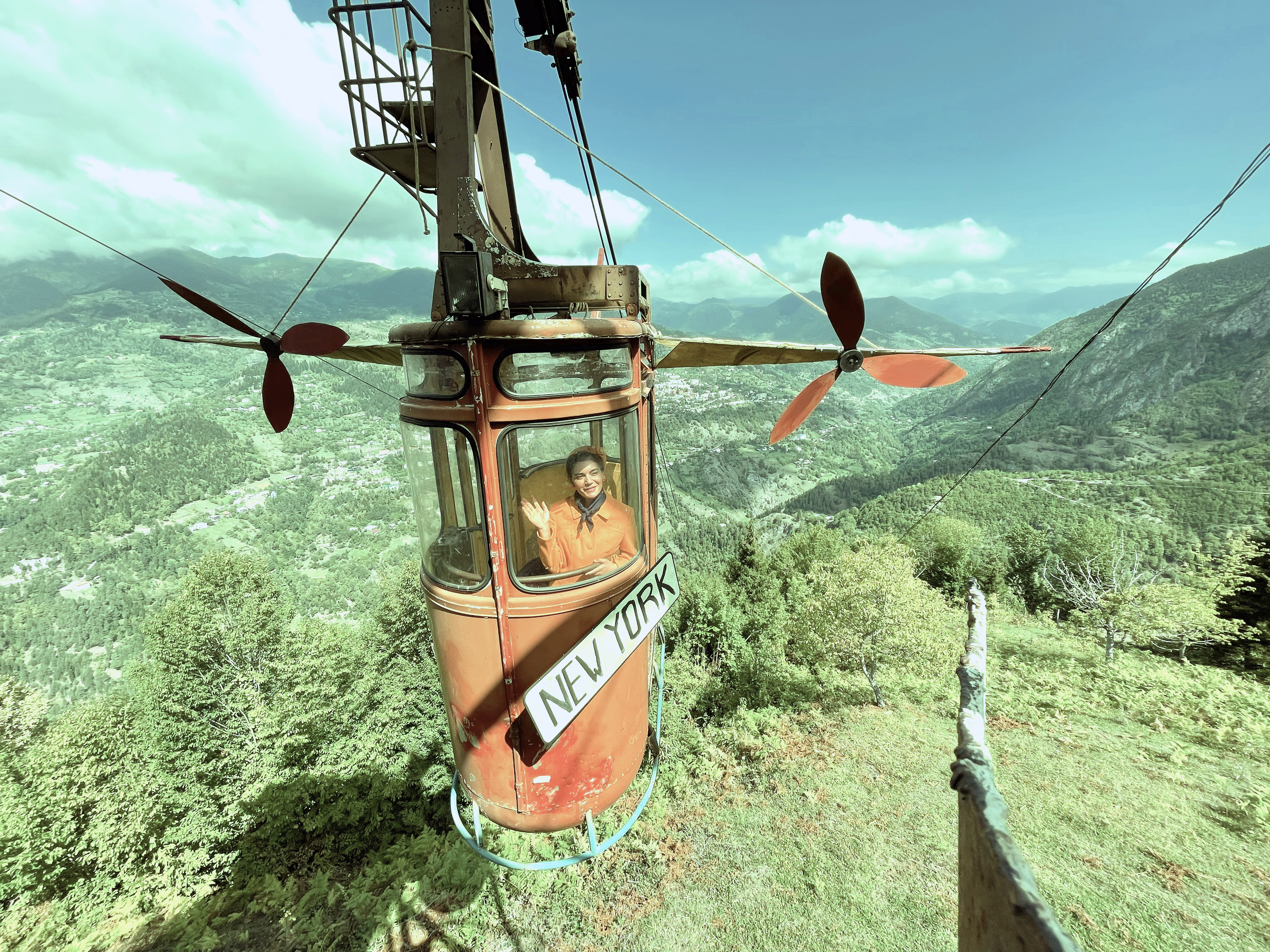
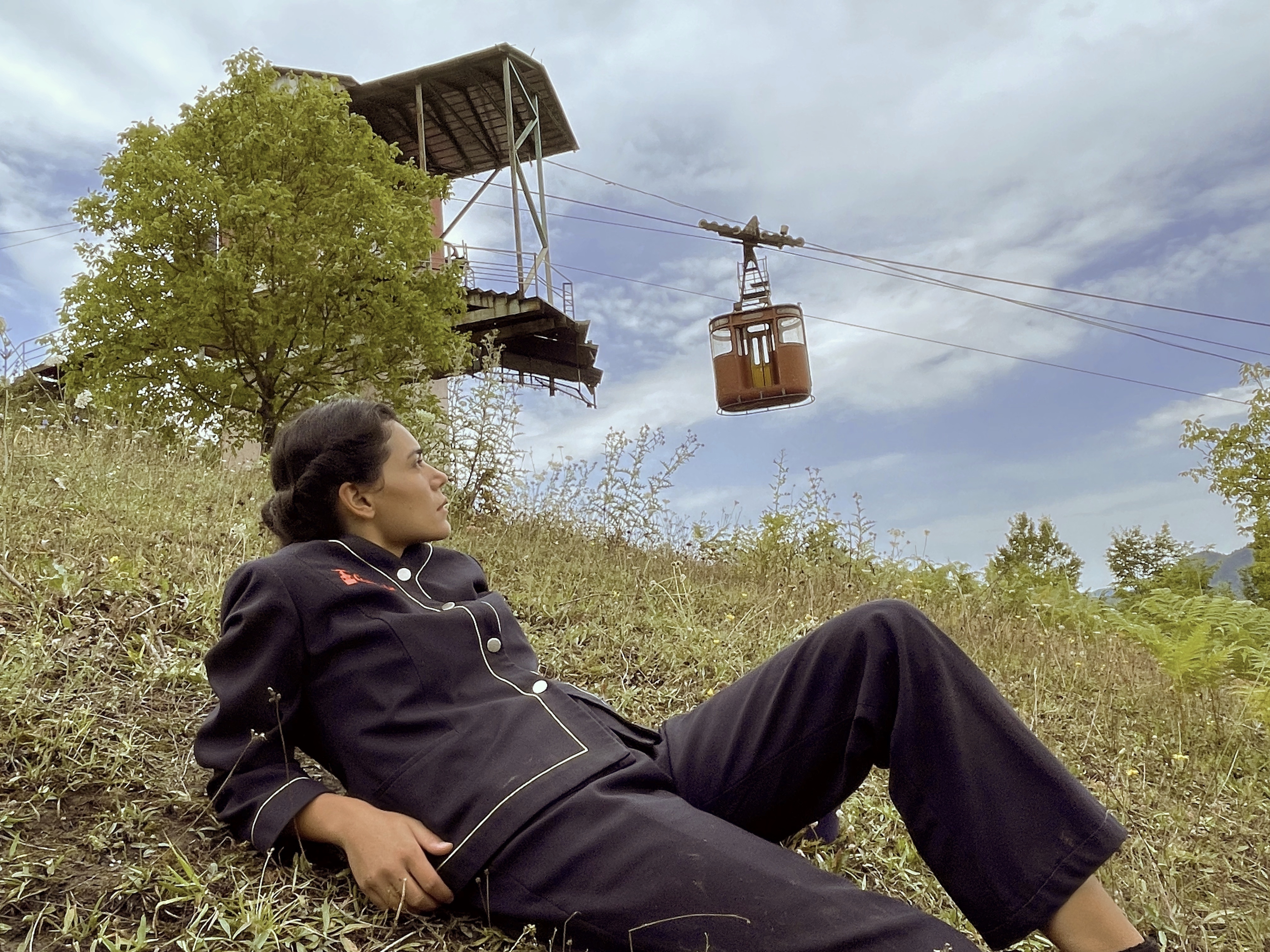
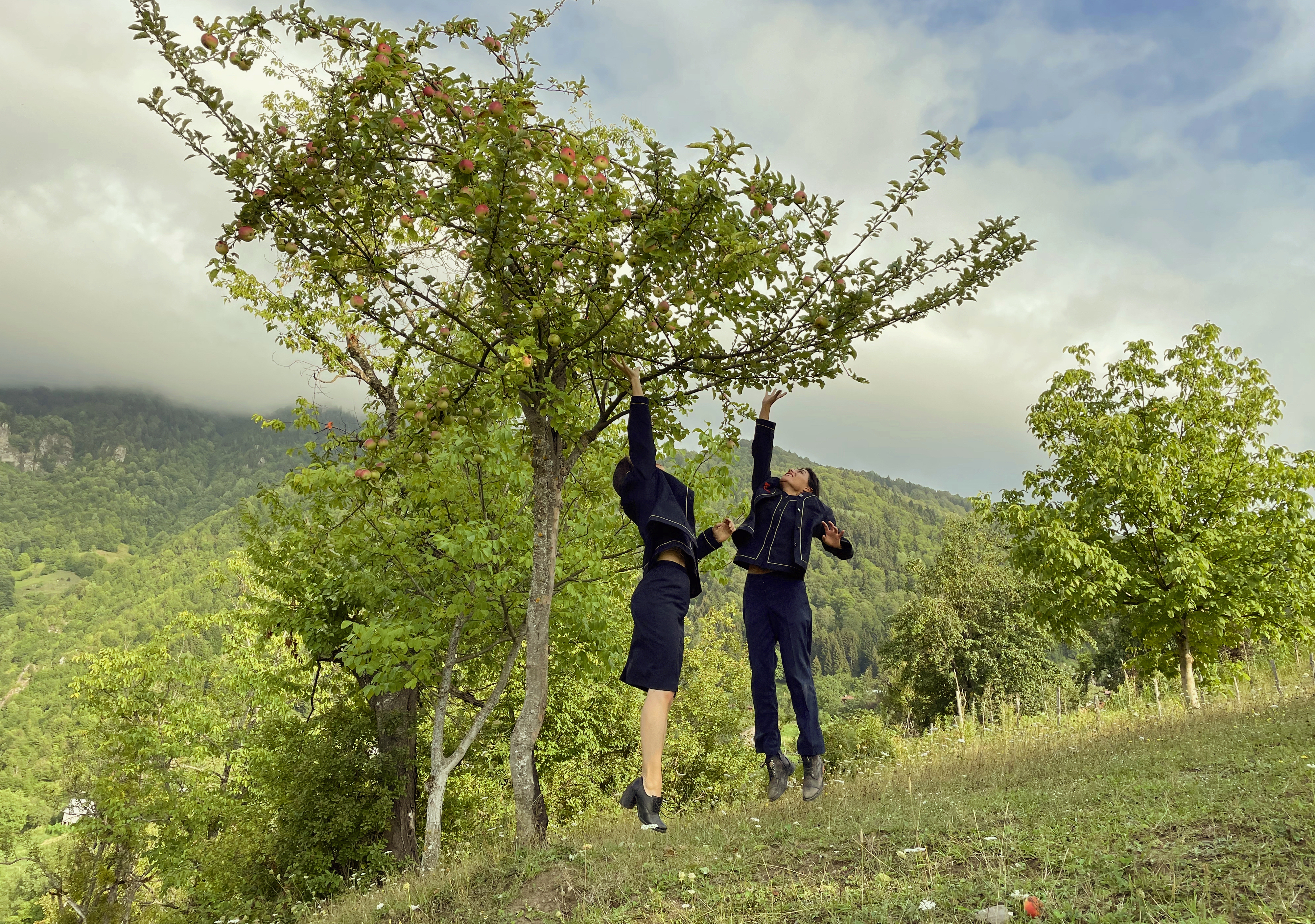
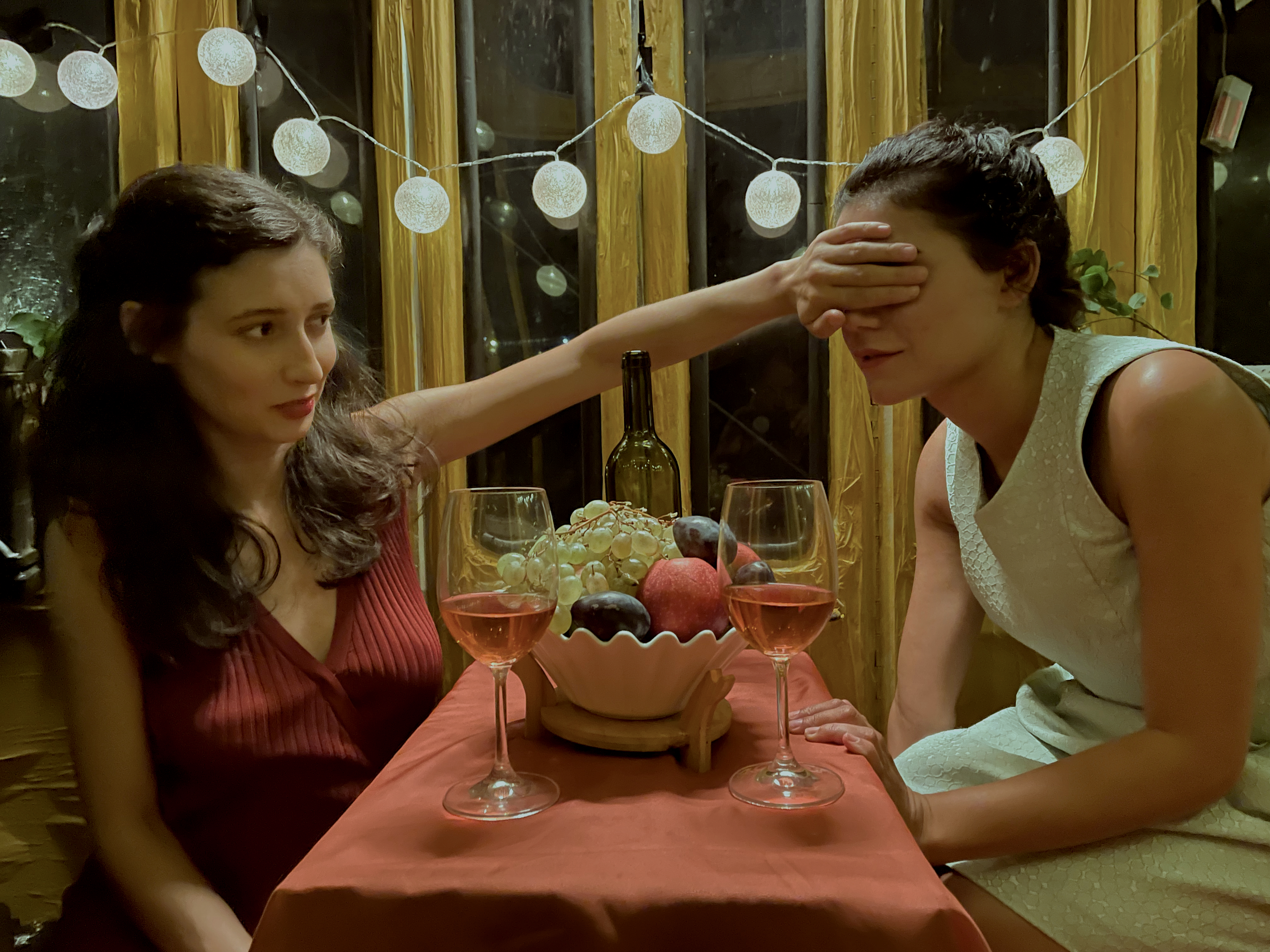
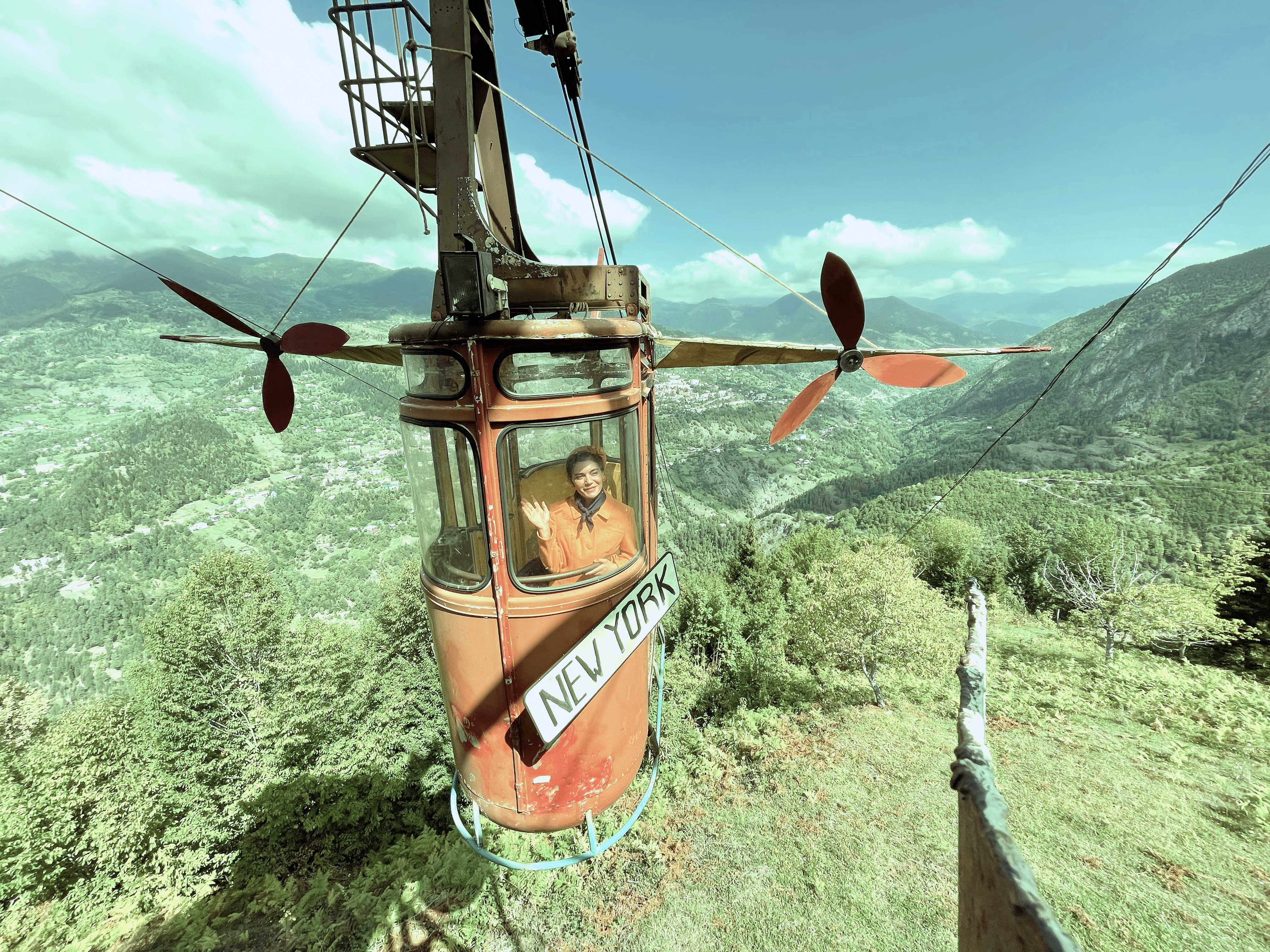
After Nino shows Iva the ropes, the two cable car drivers woo one another in increasingly ingenious ways. Day after day, the young women pass high above a quiet Georgian valley twisted with mist, cherishing each moment of connection. But when sweetness slides into sensuality, where will it send them? A man has died, his coffin carted above the village, and Iva (Mathilde Irrmann) inherits his crooked home and high-flying occupation. At first, villagers treat her with an enigmatic disdain, and she spends her days transporting customers and goods back and forth in disquiet, stealing glances at Nino (Nini Soselia). The flirtation grows as intense as their ongoing chess game, set to the rhythm of the rusted gears and their little kindnesses. Together, they will take on a surly widow (Niara Chichinadze) and lecherous boss (Zuka Papuashvili) as their courtship reaches new heights. Auteur Veit Helmer’s Gondola has the raw intensity of silent cinema and the enchanting whimsy of Amélie. Impelled by its beguiling leads and breathtaking cinematography, the film is a love letter to the countryside and those who live there, and an invitation to let your heart soar.

Trailer

Filmmaker Bio

Writer-director-producer Veit Helmer shot his first film at the age of 14. He studied film directing at HFF Munich. He co-wrote the feature film A Trick of Light directed by Wim Wenders, premiered in Venice 1997. His first feature film Tuvalu (1999), starring Denis Lavant, had been invited to 62 festivals, including San Sebastian, London, Chicago, Berlin and Karlovy Vary. Besides fiction films, Veit Helmer directed three documentary films. He holds lectures at film schools in Prague, Beirut, Tbilisi, Dakarta and Almaty.

Producer

Veit Helmer, Tsiako Abesadze, Noshre Chkhaidze

Writer

Veit Helmer

Cinematographer

Goga Devdariani

Cast

  • Nino Soselia
  • Mathilde Irrmann
Image
Image
Image
Image
Image
Image
Image
Image
Image
Image
Image
Image

PARTNERS

Goethe Institut

You might also like

PosterCompetitionFeature
Competition Icon
Thereafter (Después)[COMPETITION]97 minutes

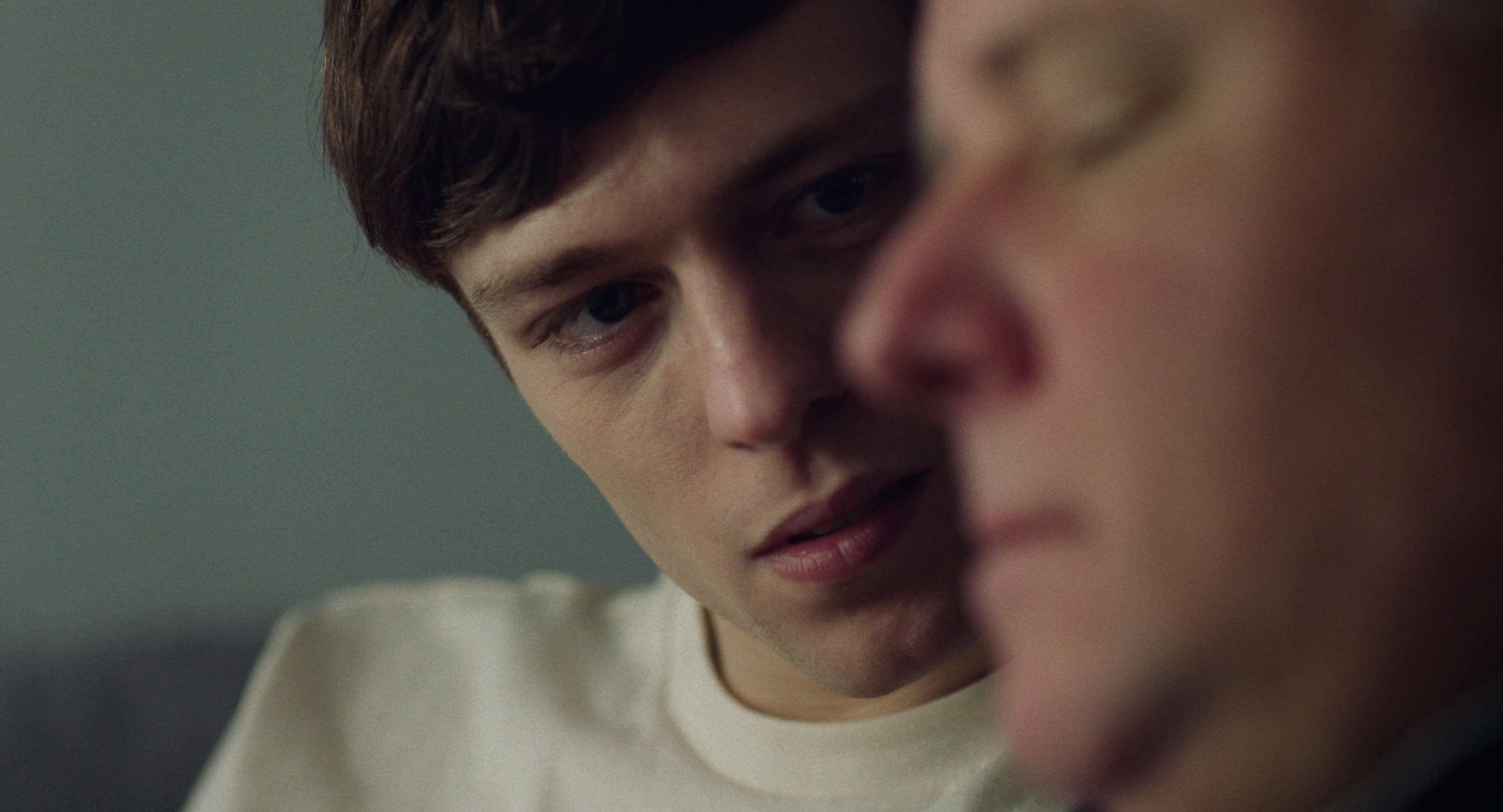
Jorge is tousled and handsome, seemingly carefree, shouldering changes with cheerful resignation. But after his sudden death, his young mother and best friend, Carmen, is left grief-stricken, forced to reckon with the veracity of her son’s life, including his two lovers—one female, one male—left wondering why he’s ghosted them. At first, Carmen (Ludwika Paleta) refuses all comforts in the wake of her son’s death, cared for, despite her protests, by her kindly queer brother (Darío Rocas). Then, she goes digging. According to Jorge’s estranged father (Luis Velazquez), Jorge (Nicolás Haza) was depressed shortly before he drowned in the sea. Is this true—if so, why? And is this enough to prove his death was intentional? The search for answers will acquaint Carmen with Jorge’s jilted girlfriend (Adriana Palafox) and lovesick boyfriend (Alan Oliva), and reconcile her with a passion for music that hounds her even when she tries to leave it behind. In this expertly crafted tearjerker, writer-director Sofía Gómez-Córdova uses seamless flashbacks and home videos of happier times to reveal who the characters were. And Ludwika Paleta’s blistering performance-of-a-lifetime shows us who Carmen may be in the Thereafter.

PosterCompetitionDocumentaryVIRTUAL EXCLUSIVE
Competition Icon
Nanekawâsis[Indigiqueer]80 minutes

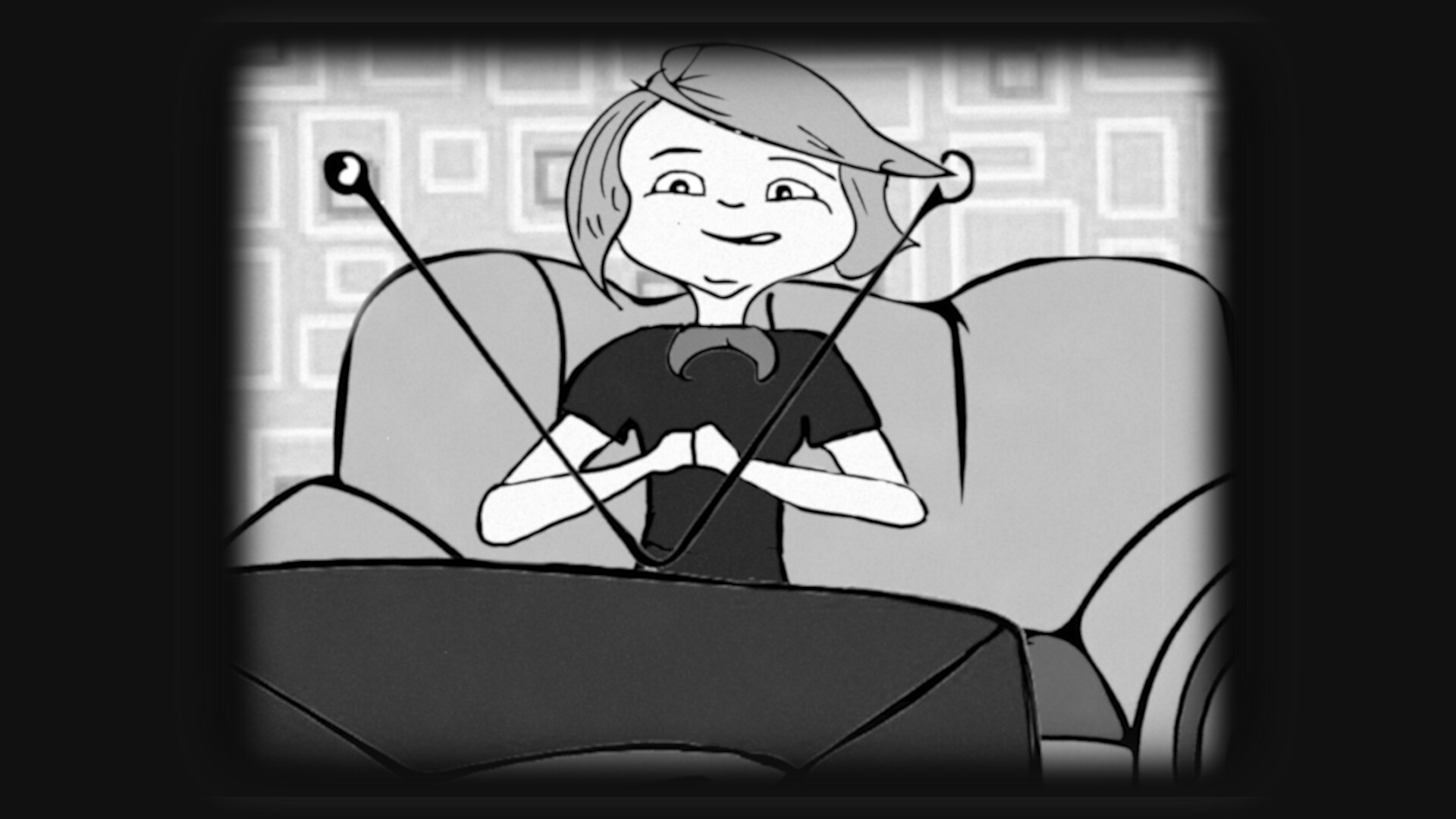
The work of Two-Spirit, nêhiyaw (Cree) artist George Littlechild took the reality of residential schools head-on decades before it would enter the collective Canadian conscience. A Sixties Scoop survivor, Littlechild uses his “whimsical,” improvised technique to unlock colourful exuberance and long-held trauma. Conor McNally, a Métis filmmaker, honours his journey. Littlechild was given his great grandfather’s name, nanekawâsis, at a Powwow in 2001. Both Littlechild and the eponymously named film embody its meaning: “swift child.” As we pay witness to a childhood shuffled between foster homes and Littlechild’s emergence as a fleet-fingered artist, the documentary makes fluid connections between past and present. Archival footage blends with warmly tinted 16mm interviews of 65-year-old Littlechild, still evolving in his practice, still passing on his deeply felt knowledge of his ancestry and “Rainbow” spirit. Whereas his partner, John Powell, uses art to govern his freewheeling tendencies, Littlechild harnesses paint to break free of his circumscribed daily life, healing himself and his audience through enlightened transcendence. nanekawâsis begins and ends with a sky full of colour, beautifully eliding time, revealing how light and dark, expectancy and reflection are all indispensable parts of life’s circle.

PosterCompetitionFeatureVIRTUAL EXCLUSIVE
Competition Icon
Out (EN)[ZEITGEIST]95 minutes

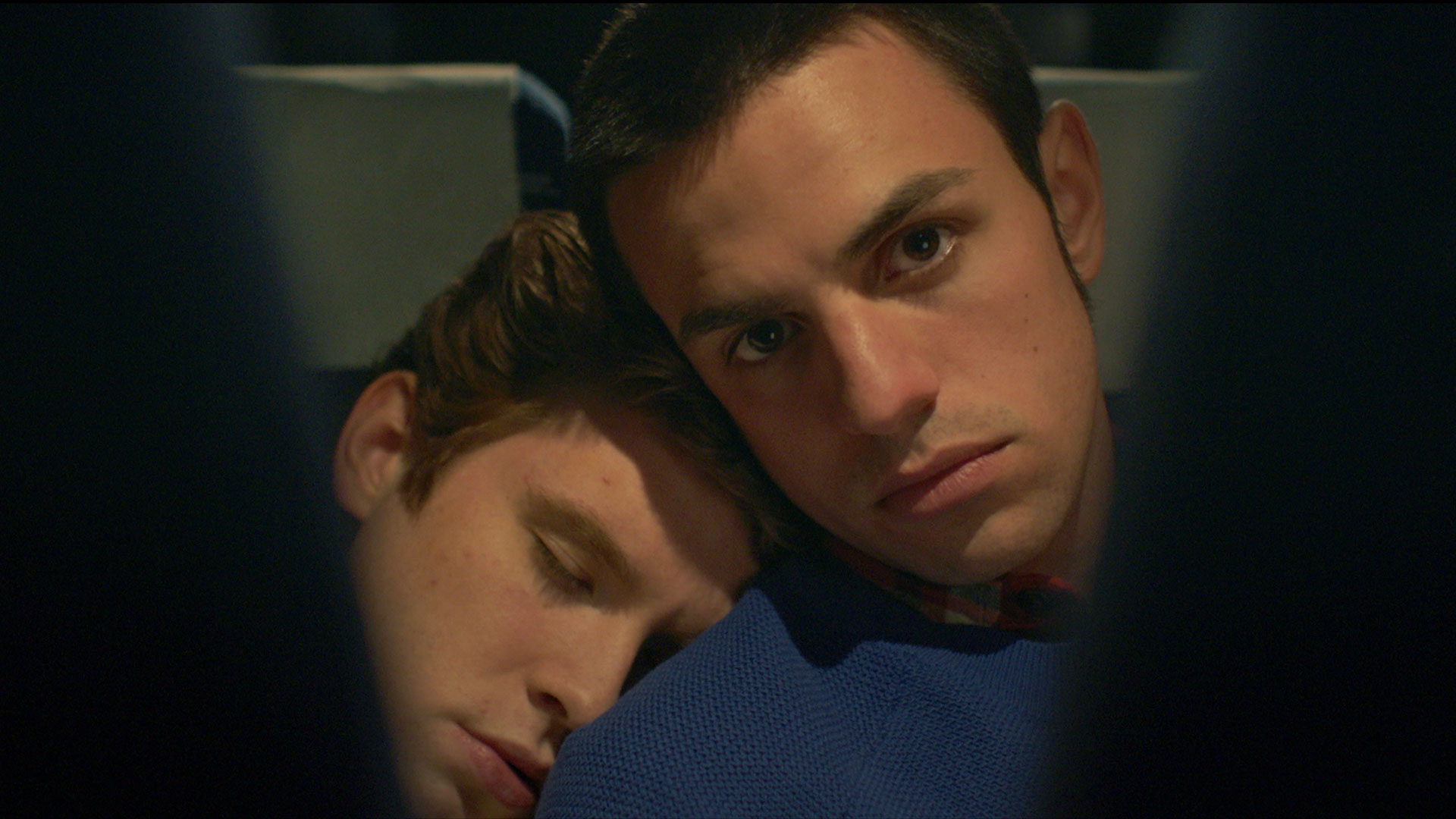
DUTCH • ENGLISH ST | Capturing the recklessness of youth and the excitement of newfound sexual liberties in sensuous black-and-white cinematography, Dennis Alink’s Out offers up a vivid and tender tale of being young and gay. Tom (Bas Keizer, in a star-making performance) and Ajani (an effervescent Jefferson Yaw Frempong-Manson) are closeted secondary school sweethearts who yearn for life outside of their small-minded, rural community in the Netherlands. Their solution is Amsterdam, where the queer scene is thriving and they can work at their dreams of becoming filmmakers. Quickly falling into the Dutch capital’s gay nightlife offers the pair some initial thrills: cheeky games of Never Have I Ever, limo rides across the city, eye-opening trips to the bathhouse. But the challenges quickly follow, pushing them to separately question: “Who am I, and where do I fit in?” Recalling such classic monochromatic films about wayward youth as The Last Picture Show and Gus Van Sant’s Mala Noche, Alink and his queer collaborators present a lived-in, piercing portrait that proves coming out isn’t just a pronouncement of one’s sexuality, it’s a simultaneously joyous and heartbreaking journey of self-discovery.

PosterCompetitionFeature
Competition Icon
Duino (EN)[COMPETITION]108 minutes

SPANISH • ENGLISH ST | Argentinian filmmaker Matías is an intense perfectionist struggling to shape his autobiographical film as the past wriggles from his grip. Is Alexander—a dashing fabulist from Sweden he met in Italy as a boy—the lost love of his life? Or just a lovely, bittersweet dream? At the United World College of the Adriatic, with its diverse, exuberant student body, young Matías (Santiago Madrussan) finds a freedom he never knew in Argentina. There, he is befriended by Alexander (Oscar Morgan), whose rousing stories and bedroom eyes make the world more magical, and whose family’s vast holiday home becomes a memory palace for all that was left unsaid. In his 40s, Matías (co-writer/director Juan Pablo Di Pace) looks back at this time and, with a festival deadline looming, tries to fathom the sizzling closeness and coded interactions. A key piece of evidence lying dormant for when he least expects it. With its meta intrigues and captivating sweep, Duino is an elegiac masterwork crackling with swoon-worthy chemistry. A film that asks: how far are we willing to go for a proper conclusion, and what, in the end, remains voices in the wind?

PosterCompetitionDocumentaryVIRTUAL EXCLUSIVE
Competition Icon
Desire Lines[COMPETITION]81 minutes

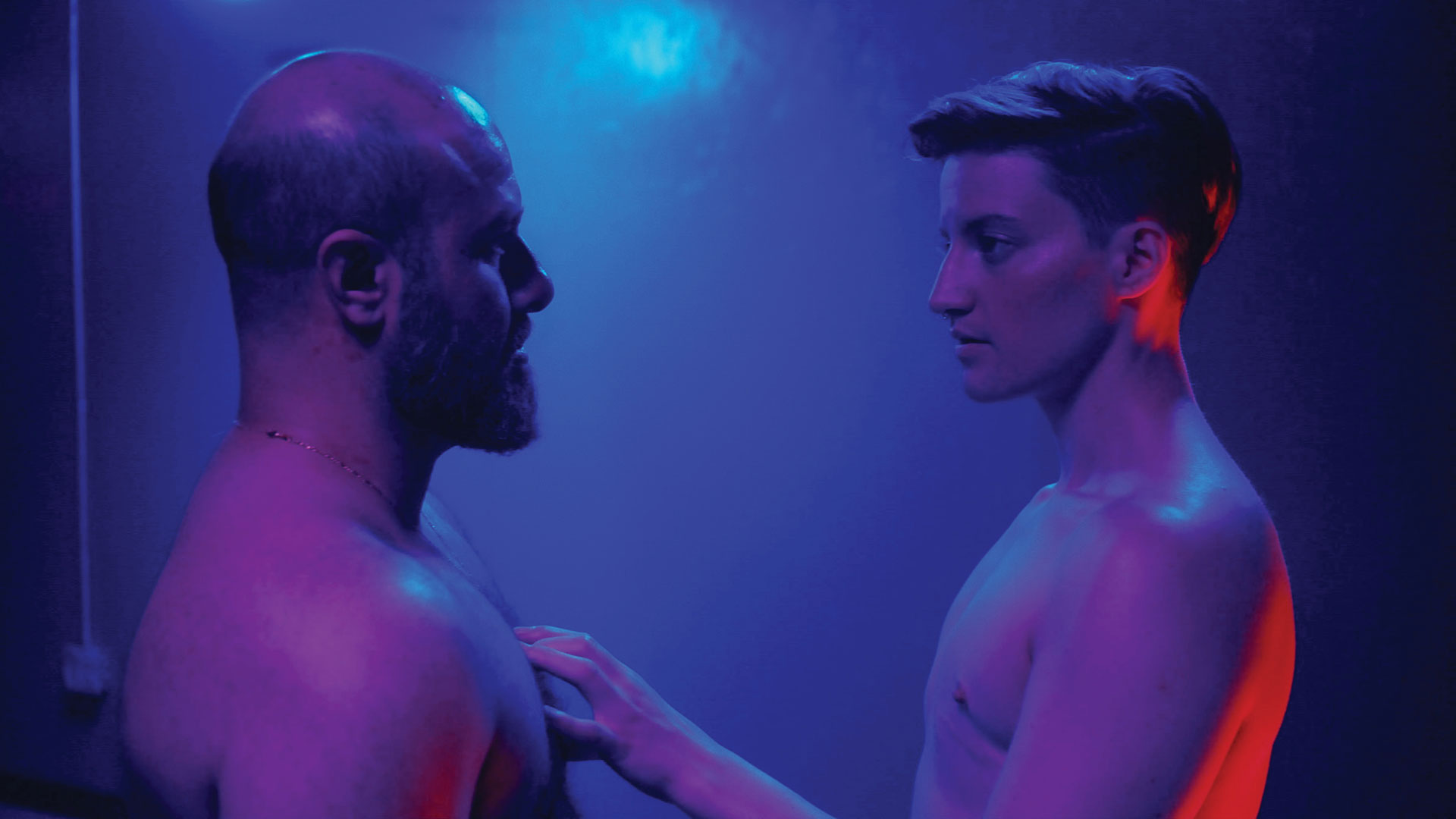
Struck by “archive fever,” a gay transmasculine Iranian-American searches for the roots of his desire. Navigating with us through this steamy hybrid documentary, he comes into contact with trailblazing transcestor Lou Sullivan, the contemporary lived experiences of other queer men, and the eroticism of his own unique body. With the assistance of young non-binary archivist Kieran (Theo Germain), older transman Ahmad (Aden Hakimi) delves into Chicago’s LGBTQ+ archives and the past and present bathhouses of Boystown to explore his homosexual longing. He learns—as we do through the real-life interviews and the history of raids and radical action that nest within this fictional storyline—that there is no one answer. There are as many points of view as there are interviewees. Archival footage of Lou Sullivan, who openly identified as trans and gay as far back as the 1970s, shows that though these conversations are not new, they are still very much necessary, connecting transmasculine gay men with themselves and the larger community. Jules Rosskam’s narratively frisky and hugely affecting film is a celebration of complexity, working to dissolve rigid labels and authoritative permission when it comes to narrating one’s own sexuality.

PosterMade au CanadaCompetitionFeatureVIRTUAL EXCLUSIVE
Made au Canada IconCompetition Icon
The Queen of My Dreams[I+N x FMC / CMF SERIES]97 minutes

This homage to Bollywood spectacle and intergenerational bonds is a time-hopping, candy-coloured crowd pleaser that induces huge smiles and big laughs while also tackling the resonant themes of enforced gender roles, passive racism, and the seismic shifts of growing up. Azra (a stunning Amrit Kaur) lives in cohabitating sexual bliss with her girlfriend in Toronto in the VHS-popping 90s when she receives news of her father’s death. One voltaic match cut later and she’s on a plane for the funeral in Pakistan with her brother (Ali A. Kazmi), where her mother (Ms. Marvel’s Nimra Bucha) nitpicks and her culture shuts her out of the mourning process. Then another and we’re in 1969 Karachi, swept up in the whirlwind romance of Azra’s rule-breaking mother (also played by Amrit Kaur, underscoring mother-daughter parallels) and dashing father (Hamza Haq) before their tough transition to 1989 Nova Scotia. Each temporal hop peeling back another layer of how Azra’s family dynamic came to be. The Queen of My Dreams is itself a moviegoer’s dream, chock-full of eye-popping visuals, high production value, and fantastic fashion. Revealing how salvation can come in unlikely ways from unlikely sources.

PosterMade au CanadaCompetitionFeature
Made au Canada IconCompetition Icon
We Forgot to Break Up[I+N Connexe]93 minutes

In the vein of the Tony award-winning musical Stereophonic, this must-see drama is a Behind the Music-style glimpse of a 2000s Toronto indie band with Fleetwood Mac-like flare ups. With a trans frontman and queer members, The New Normals break boundaries while breaking one another’s hearts. Building off the source material, the novel Heidegger Stairwell by Kayt Burgess, Karen Knox maintains balletic control of multiple perspectives and aesthetics, following how each of the five core members handles firsts: first music video, first phone sex job, first love triangle. Music saves this close-knit crew from quarrels when it’s not causing them, but it’s the in-fighting, the “threads of connection and tension” that keep their audience hungering for more. Will the trans frontman (Lane Webber) stay with his queer girlfriend and songwriting partner (June Laporte) or find a different tune with Lugh (Daniel Gravelle)? Will the band survive or live on only in tribute? These concerns converge in a film charged with envy, creative friendship, and reckless love, and chock-full of pedigreed talent, including co-writing credits from award-winning Canadian writer, Zoe Whittall and festival alumni, Pat Mills as well as original songs from Stars’ Torquil Campbell.

PosterQueerment QuébecCompetitionShort
Queerment Québec IconCompetition Icon
Landfill[COMPETITION]18 minutes

Five thousand twenty five walks. Fifty-two miles of floors mopped. Seventy hours watching movie stars kiss. Alice, a headstrong elder dyke, navigates environmentally induced illness while she contends with her unique notion of legacy.

PosterCompetitionFeature
Competition Icon
Langue étrangère[ZEITGEIST]101 minutes

In a fraught exchange between Leipzig and Strasbourg, Fanny and Lena warm to each other while the situation around them heats up. As it gets harder to parse fact from fiction, too much trust and not enough, they look to protest movements to teach them what out-of-control adults cannot. Writer-director Claire Burger’s nuanced drama is bracingly of-the-moment, capturing topical issues with a foreboding sense of longing and imminent disaster, and inspiring fiery performances from her leads, including Nina Hoss as a mother undone. After an initially cold reception from Lena (Josefa Heinsius) when she arrives in Germany, 17-year-old Fanny (Lilith Grasmug) will do anything to ingratiate herself with her prickly pen pal. Chocolate-covered shrooms, sexual experimentation, bonding over Antifa and black bloc protest movements—each attempt at connection becomes more daring than the one before, their “Franco-German friendship” mirroring the heated clashes of our time. When the school exchange is flipped, and Lena is now the fish out of water in France, giving into the attraction sizzling under her animosity will mean coming to terms with a world tearing apart at the seams and the fantasies built up to survive it.

PosterCompetitionFeature
Competition Icon
Baby (EN)[COMPETITION]107 minutes

PORTUGUESE • ENGLISH ST | Wellington (defiantly nicknamed Baby) trades his detention centre cell for the streets of São Paulo, absorbed into the life of an in-demand “escort” with old school methods. Torn between this erotic father figure, two chosen families, and the mother who left him, Wellington must discern which link is the strongest. Against a backdrop of corrupt cops, vengeful kingpins, and Brazilian ball culture, maybe-18-year-old Wellington (João Pedro Mariano) falls for 42-year-old sex worker cum drug dealer Ronaldo (Ricardo Teodoro), who has a son not much younger than Wellington being raised by lesbian mothers. The two share a charged, teasing bond with yo-yoing power dynamics. Wellington softens Ronaldo, schooling him in voguing’s ebullience and showing him his battle scars, while Ronaldo grounds his protege, giving him boxing lessons while doling out paternal advice and setting strict boundaries. Boundaries that Ronaldo is desperate to maintain and Wellington comes to resent when youthful potential and a biological parent draw him away. Propelled by Marcelo Caetano’s stylish direction, this gritty coming-of-age tale wrestles with themes of love and coercion, considering what’s still possible for a restless heart when a ‘baby’ becomes a man.

PosterCompetitionFeature
Competition Icon
Thereafter (Después)[COMPETITION]97 minutes

Jorge is tousled and handsome, seemingly carefree, shouldering changes with cheerful resignation. But after his sudden death, his young mother and best friend, Carmen, is left grief-stricken, forced to reckon with the veracity of her son’s life, including his two lovers—one female, one male—left wondering why he’s ghosted them. At first, Carmen (Ludwika Paleta) refuses all comforts in the wake of her son’s death, cared for, despite her protests, by her kindly queer brother (Darío Rocas). Then, she goes digging. According to Jorge’s estranged father (Luis Velazquez), Jorge (Nicolás Haza) was depressed shortly before he drowned in the sea. Is this true—if so, why? And is this enough to prove his death was intentional? The search for answers will acquaint Carmen with Jorge’s jilted girlfriend (Adriana Palafox) and lovesick boyfriend (Alan Oliva), and reconcile her with a passion for music that hounds her even when she tries to leave it behind. In this expertly crafted tearjerker, writer-director Sofía Gómez-Córdova uses seamless flashbacks and home videos of happier times to reveal who the characters were. And Ludwika Paleta’s blistering performance-of-a-lifetime shows us who Carmen may be in the Thereafter.

PosterCompetitionDocumentaryVIRTUAL EXCLUSIVE
Competition Icon
Nanekawâsis[Indigiqueer]80 minutes

The work of Two-Spirit, nêhiyaw (Cree) artist George Littlechild took the reality of residential schools head-on decades before it would enter the collective Canadian conscience. A Sixties Scoop survivor, Littlechild uses his “whimsical,” improvised technique to unlock colourful exuberance and long-held trauma. Conor McNally, a Métis filmmaker, honours his journey. Littlechild was given his great grandfather’s name, nanekawâsis, at a Powwow in 2001. Both Littlechild and the eponymously named film embody its meaning: “swift child.” As we pay witness to a childhood shuffled between foster homes and Littlechild’s emergence as a fleet-fingered artist, the documentary makes fluid connections between past and present. Archival footage blends with warmly tinted 16mm interviews of 65-year-old Littlechild, still evolving in his practice, still passing on his deeply felt knowledge of his ancestry and “Rainbow” spirit. Whereas his partner, John Powell, uses art to govern his freewheeling tendencies, Littlechild harnesses paint to break free of his circumscribed daily life, healing himself and his audience through enlightened transcendence. nanekawâsis begins and ends with a sky full of colour, beautifully eliding time, revealing how light and dark, expectancy and reflection are all indispensable parts of life’s circle.

PosterCompetitionFeatureVIRTUAL EXCLUSIVE
Competition Icon
Out (EN)[ZEITGEIST]95 minutes

DUTCH • ENGLISH ST | Capturing the recklessness of youth and the excitement of newfound sexual liberties in sensuous black-and-white cinematography, Dennis Alink’s Out offers up a vivid and tender tale of being young and gay. Tom (Bas Keizer, in a star-making performance) and Ajani (an effervescent Jefferson Yaw Frempong-Manson) are closeted secondary school sweethearts who yearn for life outside of their small-minded, rural community in the Netherlands. Their solution is Amsterdam, where the queer scene is thriving and they can work at their dreams of becoming filmmakers. Quickly falling into the Dutch capital’s gay nightlife offers the pair some initial thrills: cheeky games of Never Have I Ever, limo rides across the city, eye-opening trips to the bathhouse. But the challenges quickly follow, pushing them to separately question: “Who am I, and where do I fit in?” Recalling such classic monochromatic films about wayward youth as The Last Picture Show and Gus Van Sant’s Mala Noche, Alink and his queer collaborators present a lived-in, piercing portrait that proves coming out isn’t just a pronouncement of one’s sexuality, it’s a simultaneously joyous and heartbreaking journey of self-discovery.

PosterCompetitionFeature
Competition Icon
Duino (EN)[COMPETITION]108 minutes

SPANISH • ENGLISH ST | Argentinian filmmaker Matías is an intense perfectionist struggling to shape his autobiographical film as the past wriggles from his grip. Is Alexander—a dashing fabulist from Sweden he met in Italy as a boy—the lost love of his life? Or just a lovely, bittersweet dream? At the United World College of the Adriatic, with its diverse, exuberant student body, young Matías (Santiago Madrussan) finds a freedom he never knew in Argentina. There, he is befriended by Alexander (Oscar Morgan), whose rousing stories and bedroom eyes make the world more magical, and whose family’s vast holiday home becomes a memory palace for all that was left unsaid. In his 40s, Matías (co-writer/director Juan Pablo Di Pace) looks back at this time and, with a festival deadline looming, tries to fathom the sizzling closeness and coded interactions. A key piece of evidence lying dormant for when he least expects it. With its meta intrigues and captivating sweep, Duino is an elegiac masterwork crackling with swoon-worthy chemistry. A film that asks: how far are we willing to go for a proper conclusion, and what, in the end, remains voices in the wind?

PosterCompetitionDocumentaryVIRTUAL EXCLUSIVE
Competition Icon
Desire Lines[COMPETITION]81 minutes

Struck by “archive fever,” a gay transmasculine Iranian-American searches for the roots of his desire. Navigating with us through this steamy hybrid documentary, he comes into contact with trailblazing transcestor Lou Sullivan, the contemporary lived experiences of other queer men, and the eroticism of his own unique body. With the assistance of young non-binary archivist Kieran (Theo Germain), older transman Ahmad (Aden Hakimi) delves into Chicago’s LGBTQ+ archives and the past and present bathhouses of Boystown to explore his homosexual longing. He learns—as we do through the real-life interviews and the history of raids and radical action that nest within this fictional storyline—that there is no one answer. There are as many points of view as there are interviewees. Archival footage of Lou Sullivan, who openly identified as trans and gay as far back as the 1970s, shows that though these conversations are not new, they are still very much necessary, connecting transmasculine gay men with themselves and the larger community. Jules Rosskam’s narratively frisky and hugely affecting film is a celebration of complexity, working to dissolve rigid labels and authoritative permission when it comes to narrating one’s own sexuality.

PosterMade au CanadaCompetitionFeatureVIRTUAL EXCLUSIVE
Made au Canada IconCompetition Icon
The Queen of My Dreams[I+N x FMC / CMF SERIES]97 minutes

This homage to Bollywood spectacle and intergenerational bonds is a time-hopping, candy-coloured crowd pleaser that induces huge smiles and big laughs while also tackling the resonant themes of enforced gender roles, passive racism, and the seismic shifts of growing up. Azra (a stunning Amrit Kaur) lives in cohabitating sexual bliss with her girlfriend in Toronto in the VHS-popping 90s when she receives news of her father’s death. One voltaic match cut later and she’s on a plane for the funeral in Pakistan with her brother (Ali A. Kazmi), where her mother (Ms. Marvel’s Nimra Bucha) nitpicks and her culture shuts her out of the mourning process. Then another and we’re in 1969 Karachi, swept up in the whirlwind romance of Azra’s rule-breaking mother (also played by Amrit Kaur, underscoring mother-daughter parallels) and dashing father (Hamza Haq) before their tough transition to 1989 Nova Scotia. Each temporal hop peeling back another layer of how Azra’s family dynamic came to be. The Queen of My Dreams is itself a moviegoer’s dream, chock-full of eye-popping visuals, high production value, and fantastic fashion. Revealing how salvation can come in unlikely ways from unlikely sources.

PosterMade au CanadaCompetitionFeature
Made au Canada IconCompetition Icon
We Forgot to Break Up[I+N Connexe]93 minutes

In the vein of the Tony award-winning musical Stereophonic, this must-see drama is a Behind the Music-style glimpse of a 2000s Toronto indie band with Fleetwood Mac-like flare ups. With a trans frontman and queer members, The New Normals break boundaries while breaking one another’s hearts. Building off the source material, the novel Heidegger Stairwell by Kayt Burgess, Karen Knox maintains balletic control of multiple perspectives and aesthetics, following how each of the five core members handles firsts: first music video, first phone sex job, first love triangle. Music saves this close-knit crew from quarrels when it’s not causing them, but it’s the in-fighting, the “threads of connection and tension” that keep their audience hungering for more. Will the trans frontman (Lane Webber) stay with his queer girlfriend and songwriting partner (June Laporte) or find a different tune with Lugh (Daniel Gravelle)? Will the band survive or live on only in tribute? These concerns converge in a film charged with envy, creative friendship, and reckless love, and chock-full of pedigreed talent, including co-writing credits from award-winning Canadian writer, Zoe Whittall and festival alumni, Pat Mills as well as original songs from Stars’ Torquil Campbell.

PosterQueerment QuébecCompetitionShort
Queerment Québec IconCompetition Icon
Landfill[COMPETITION]18 minutes

Five thousand twenty five walks. Fifty-two miles of floors mopped. Seventy hours watching movie stars kiss. Alice, a headstrong elder dyke, navigates environmentally induced illness while she contends with her unique notion of legacy.

PosterCompetitionFeature
Competition Icon
Langue étrangère[ZEITGEIST]101 minutes

In a fraught exchange between Leipzig and Strasbourg, Fanny and Lena warm to each other while the situation around them heats up. As it gets harder to parse fact from fiction, too much trust and not enough, they look to protest movements to teach them what out-of-control adults cannot. Writer-director Claire Burger’s nuanced drama is bracingly of-the-moment, capturing topical issues with a foreboding sense of longing and imminent disaster, and inspiring fiery performances from her leads, including Nina Hoss as a mother undone. After an initially cold reception from Lena (Josefa Heinsius) when she arrives in Germany, 17-year-old Fanny (Lilith Grasmug) will do anything to ingratiate herself with her prickly pen pal. Chocolate-covered shrooms, sexual experimentation, bonding over Antifa and black bloc protest movements—each attempt at connection becomes more daring than the one before, their “Franco-German friendship” mirroring the heated clashes of our time. When the school exchange is flipped, and Lena is now the fish out of water in France, giving into the attraction sizzling under her animosity will mean coming to terms with a world tearing apart at the seams and the fantasies built up to survive it.

PosterCompetitionFeature
Competition Icon
Baby (EN)[COMPETITION]107 minutes

PORTUGUESE • ENGLISH ST | Wellington (defiantly nicknamed Baby) trades his detention centre cell for the streets of São Paulo, absorbed into the life of an in-demand “escort” with old school methods. Torn between this erotic father figure, two chosen families, and the mother who left him, Wellington must discern which link is the strongest. Against a backdrop of corrupt cops, vengeful kingpins, and Brazilian ball culture, maybe-18-year-old Wellington (João Pedro Mariano) falls for 42-year-old sex worker cum drug dealer Ronaldo (Ricardo Teodoro), who has a son not much younger than Wellington being raised by lesbian mothers. The two share a charged, teasing bond with yo-yoing power dynamics. Wellington softens Ronaldo, schooling him in voguing’s ebullience and showing him his battle scars, while Ronaldo grounds his protege, giving him boxing lessons while doling out paternal advice and setting strict boundaries. Boundaries that Ronaldo is desperate to maintain and Wellington comes to resent when youthful potential and a biological parent draw him away. Propelled by Marcelo Caetano’s stylish direction, this gritty coming-of-age tale wrestles with themes of love and coercion, considering what’s still possible for a restless heart when a ‘baby’ becomes a man.