Image+Nation
Desire Lines

Desire Lines

JULES ROSSKAM | GERMANY | 2024 | 81 MIN | ENGLISH

JULES ROSSKAM | GERMANY | 2024 | 81 MIN | ENGLISH

DocumentaryCOMPETITIONA Question of Gender

Presented by

Goethe Institut

Synopsis

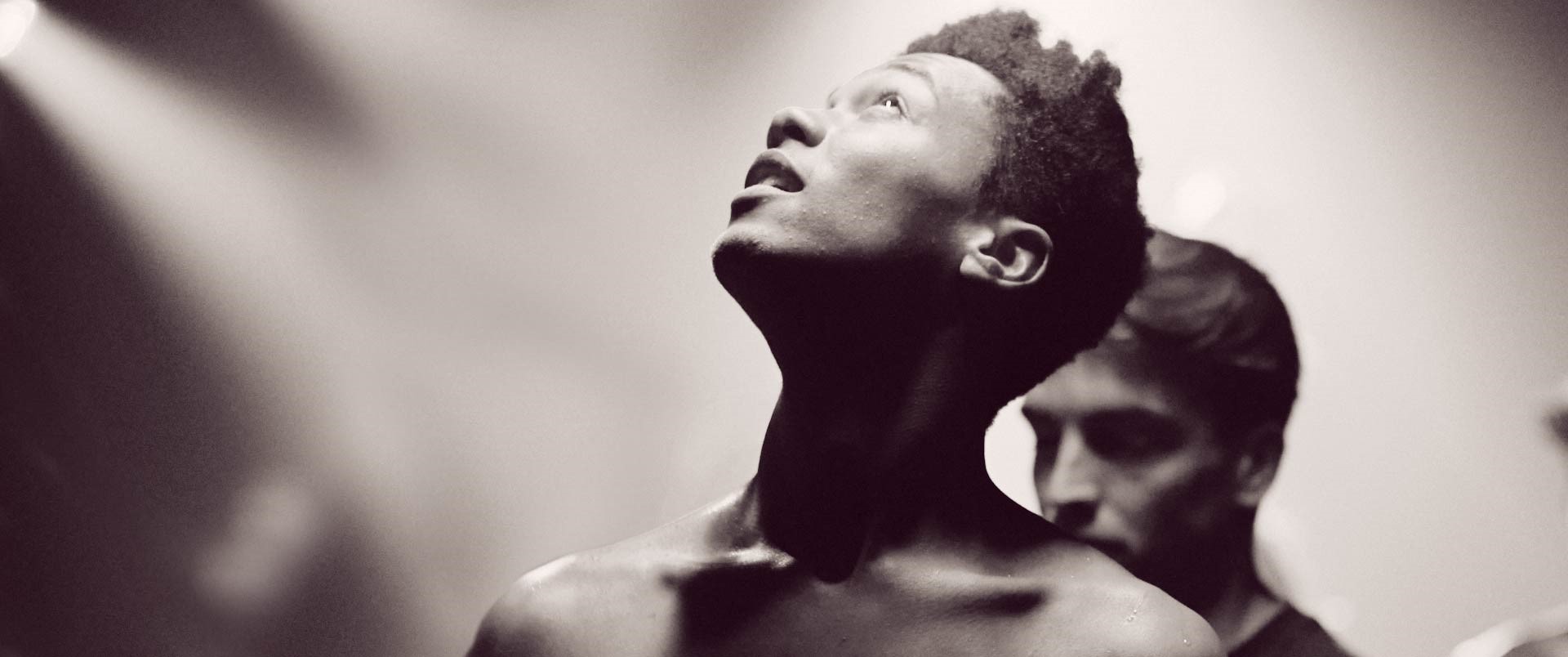
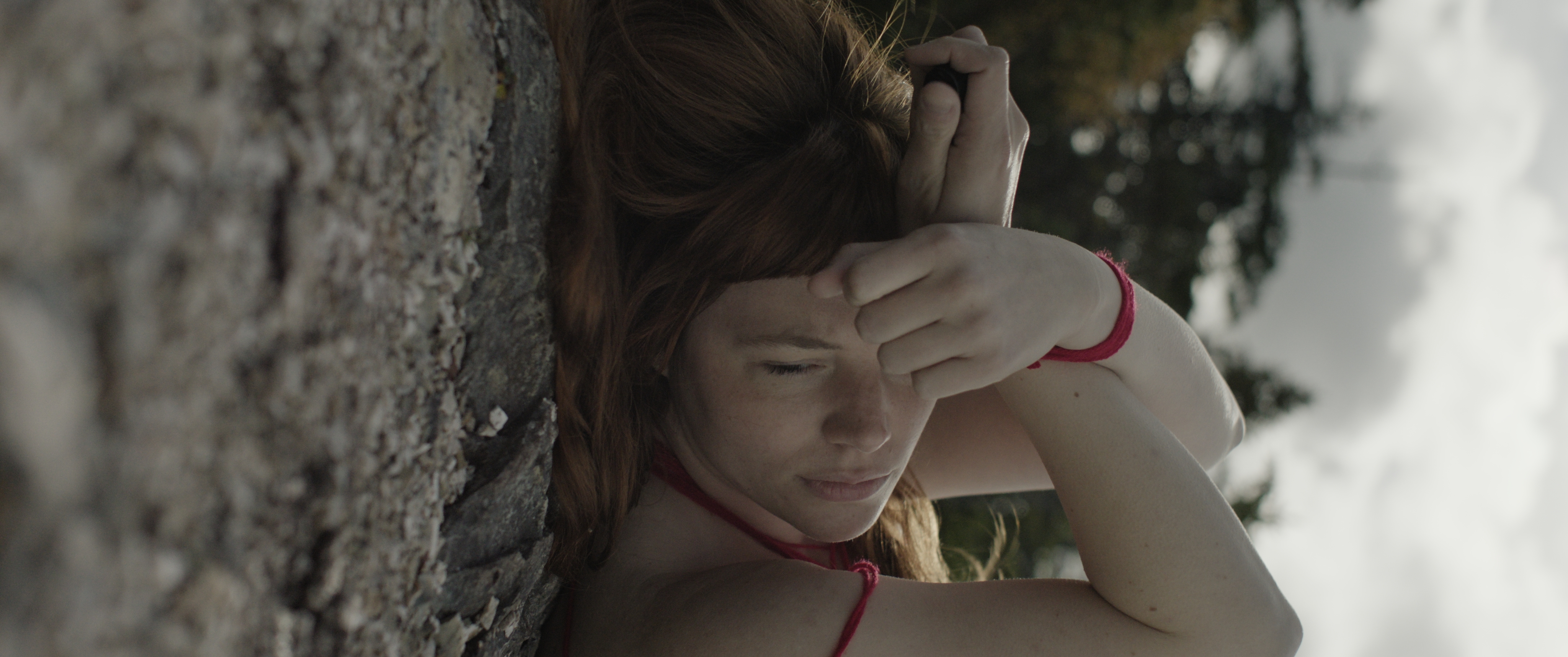
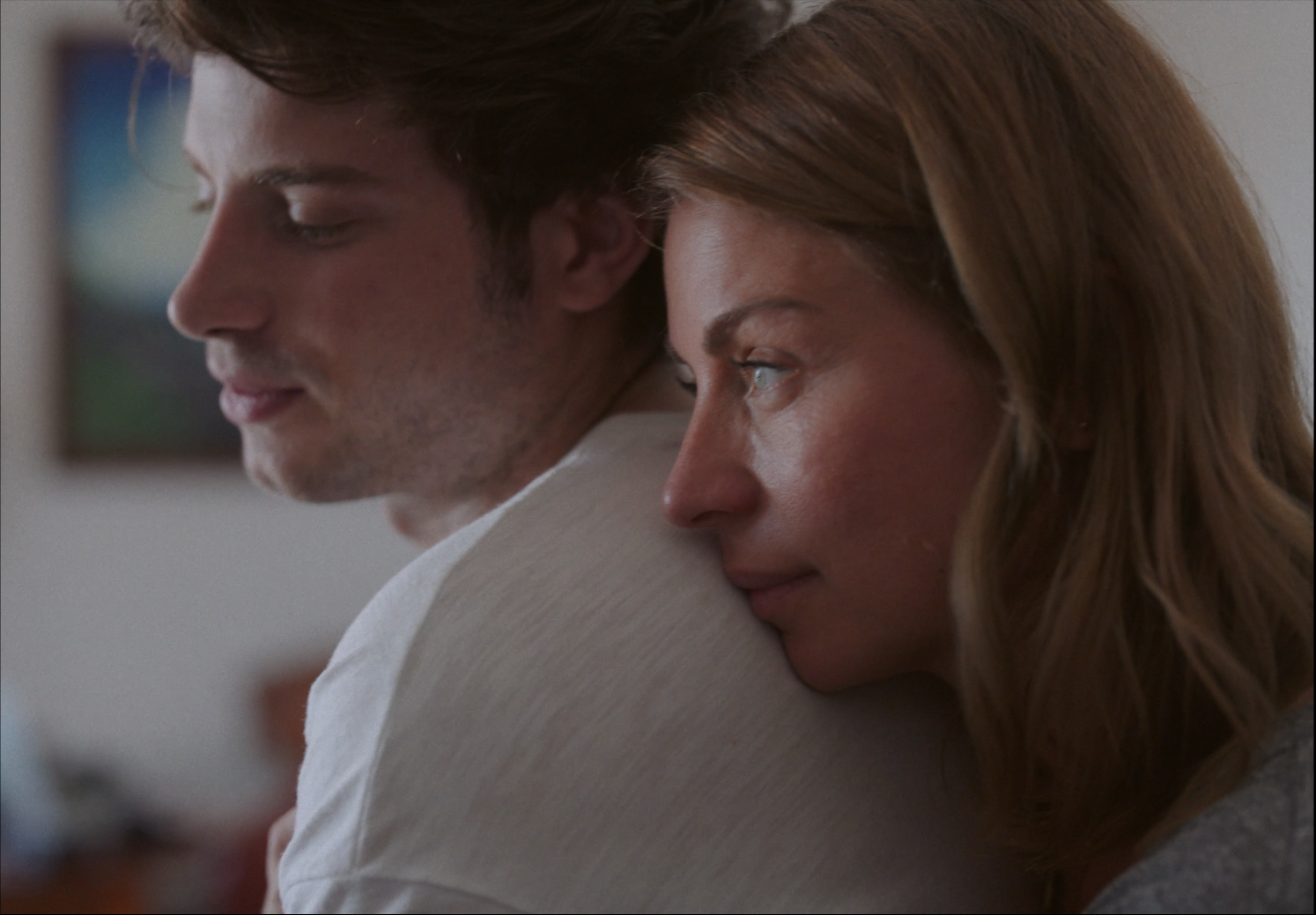
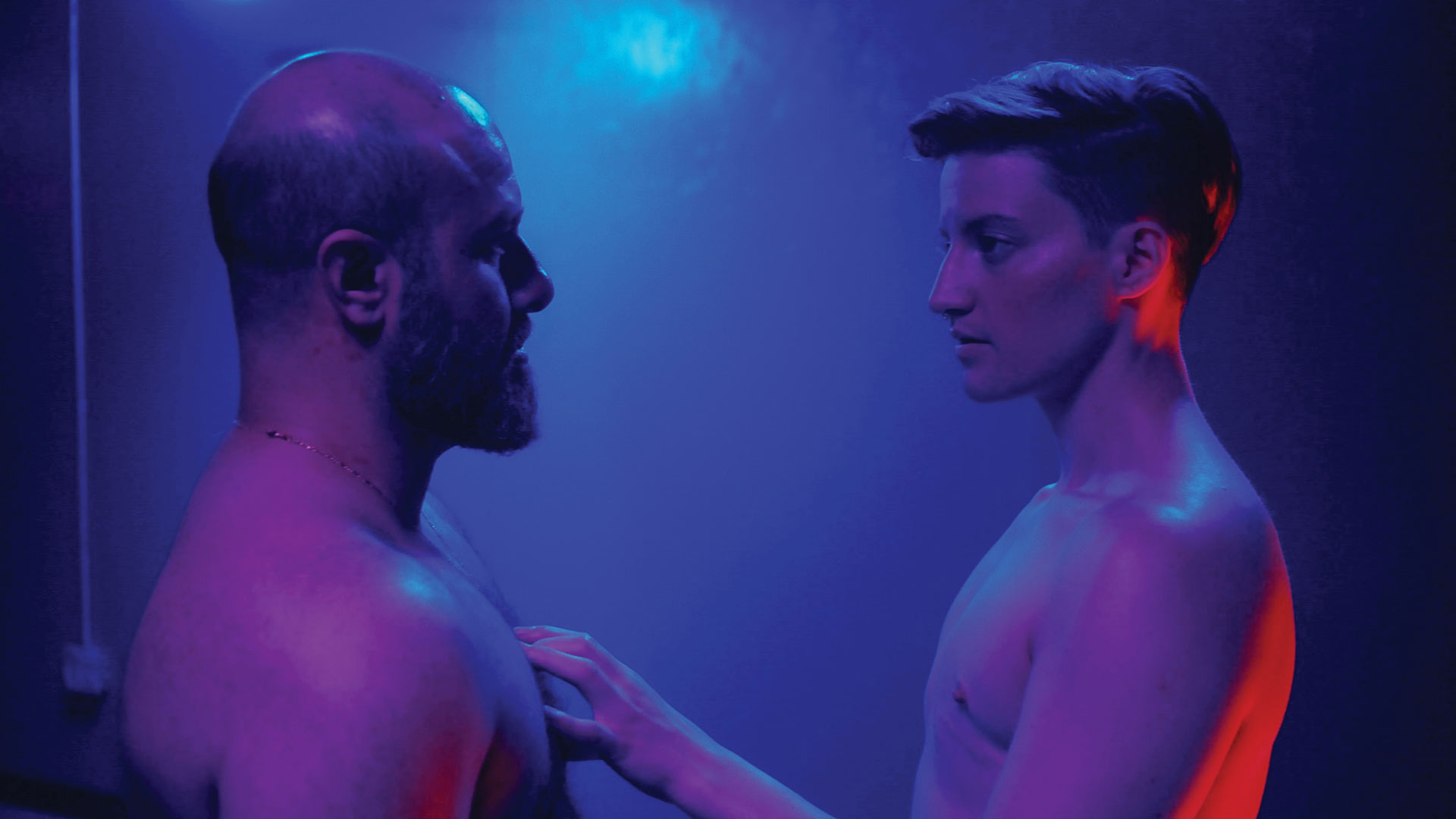
Struck by “archive fever,” a gay transmasculine Iranian-American searches for the roots of his desire. Navigating with us through this steamy hybrid documentary, he comes into contact with trailblazing transcestor Lou Sullivan, the contemporary lived experiences of other queer men, and the eroticism of his own unique body. With the assistance of young non-binary archivist Kieran (Theo Germain), older transman Ahmad (Aden Hakimi) delves into Chicago’s LGBTQ+ archives and the past and present bathhouses of Boystown to explore his homosexual longing. He learns—as we do through the real-life interviews and the history of raids and radical action that nest within this fictional storyline—that there is no one answer. There are as many points of view as there are interviewees. Archival footage of Lou Sullivan, who openly identified as trans and gay as far back as the 1970s, shows that though these conversations are not new, they are still very much necessary, connecting transmasculine gay men with themselves and the larger community. Jules Rosskam’s narratively frisky and hugely affecting film is a celebration of complexity, working to dissolve rigid labels and authoritative permission when it comes to narrating one’s own sexuality.

Trailer

Filmmaker Bio

Jules Rosskam (Director/Producer/Writer) is an internationally award-winning trans filmmaker, educator and 2021 Creative Capital Awardee. His feature documentary Paternal Rites (2018), premiered at MoMA’s Doc Fortnight and went on to win several festival awards. His work has been screened at the Museum of Modern Art, the Museum of Fine Art Boston, the British Film Institute, Arsenal Berlin, Anthology Film Archives, and hundreds of film festivals worldwide. He is currently Associate Professor of Visual Arts at the University of Maryland Baltimore County.

Director's Statement

As a trans artist, I have been—and continue to be—compelled by the radical potential of bodies that refuse to (or simply cannot) conform to society’s expectations. In my work, I want to continue to push the boundaries of cinema, offering my communities a radical vision of where we came from, who we are, and what we aspire to. I hope my films produce undoings, both big and small. In a climate where over 300 anti-trans bills and 200 anti-gay bills were proposed just last year, DESIRE LINES dares to prioritize trans pleasure, connection, and joy above the impulse to educate cis people about our humanity. Through critical engagement with the normalizing effects that traditional documentary and narrative film forms have on us, I aim to induce a perceptual shift in our understanding of how and what bodies mean, toward an apprehension of multiplicities. My use of fiction and performance combined with traditional documentary is my way of cleaving open the space between reality, fantasy, and “authenticity,” drawing together disparate people and places, highlighting affinity as a strategy for social change My films utilize complex and nonnormative structures precisely because as a queer and trans person I use complex and nonnormative structures to understand myself and the world around me. Traditional narrative structures are by definition oppressive and controlling. Traditional narratives demand a straight progress through time, through life, through love, through sexuality and conflict and family—a straight progress that would have us believe in and desirous of state-sanctioned institutions and relations. When I try to fit stories and images into traditional narrative structures, these stories lose the queer temporalities and teleological inversions inherent in our trans lives. Our stories and images are constrained, restrained, and strain to fit into narratives within which they lose so much of their queerness and their specificity… Something I think about often when I turn the camera on someone other than myself is, “What kind of power dynamic exists there. In what ways might the questions I pose actually harm the person in front of the camera?” And thinking beyond this simple formulation, I am asking myself how I can create a space—meaning an actual physical space that I share with the subject, and also a space as in the visual worlds created by the film—where the subject can speak and be heard anew? Related to this, the notion of opacity is important to me. Meaning, that I believe that one has the right to the opacity of self, as a political strategy and that includes in the realm of the visual, where there is an emphasis on “being seen,” or making oneself comprehensible. In this way, ethics are a central concern in my practice. As a transman who has actively built community with other trans and queer men for decades, my connection to the story and participants in DESIRE LINES is deep and personal, extending far beyond the scope of the project. When my own desires shifted along with my gender, I was scared that gatekeepers would deny me access to medical transition. I was part of a generation of transmen that was forced underground by the Henry Benjamin Standards of Care (which mandated that we be straight), leading to our erasure from gay spaces, rising HIV infection rates, and soaring suicide rates. Using my experience as a jumping-off point, I have carefully parsed the real-life experiences from community members to create a film I’ve dreamed of making for almost two decades. I am particularly interested in the intersections of queer of color, feminist, and decolonial theories with avantgarde filmmaking practices because of the interventions these meetings produce in discourses of power, aesthetics, and representation. I would firmly place my work alongside experimental and avant-garde artists attempting to “create new languages”; to completely shift the way we perceive the world. These shifts are vital to my communities’ survival. … Queer lives don’t make sense. We are not supposed to be alive, to love the people we love, to live in our bodies so creatively. And it is precisely this confusion—this nonsense—that I seek to preserve for the ways that it exposes and rejects normativity. I believe we need to hold onto, acknowledge, and celebrate this otherness, not because we thrive on being contrarian, but because the regimes of normality are the forces that seek to obliterate us. We must resist in order to survive. – Filmmaker Jules Rosskam, @2014 Duke University American culture is more divided than ever, with entrenched binaries dominating public discourse around gender, reproductive rights, and racial capitalism. My Jewish heritage is, in many ways, at the core of who I am and how I engage with the world. Judaism instilled in me an unyielding desire to learn alongside an unwavering belief in social and economic justice for all. The latter does not live in me as some abstract “good” to work toward, but rather as an essential part of life itself. While art and activism are not the same thing, there is clearly a long history of artists working tandem with social movements, and that is how I see my films functioning. Today, an explosion of trans visibility framed by normative, cisgender assumptions has given way to a backlash led by conservative politicians leveraging fear and ignorance to put trans people at the center of the culture wars. DESIRE LINES draws strength for these times by reaching back to a lineage that extends backward and forward simultaneously to offer a complex, desiring, and desirable portrayal of trans masculinity which is sorely missing from our media landscape.

Producer

Eugene Sun Park, Jason Masumoto, Jennifer Reeder, AJ Escoffery, Jules Rosskam, André Pérez, Amy E. Powell, Brittani Ward, Angie Gaffney, Luzzo, Lydia Grijalva

Writer

Jules Rosskam, Nate Gualtieri

Cinematographer

Marie Hinson

Cast

  • Theo Germaine
  • Aden Hakimi
Image
Image
Image
Image
Image
Image
Image
Image
Image
Image

PARTNERS

Goethe Institut

You might also like

PosterShort
Dreams of Sunlight Through Trees[MADE AU CANADA]16 minutes

A middle aged trans man transitions at 44 and observes his changes over a year and nine months, with a looming ongoing news cycle of anti-trans legislation.

PosterFeature
Gondola[COMPETITION]86 minutes

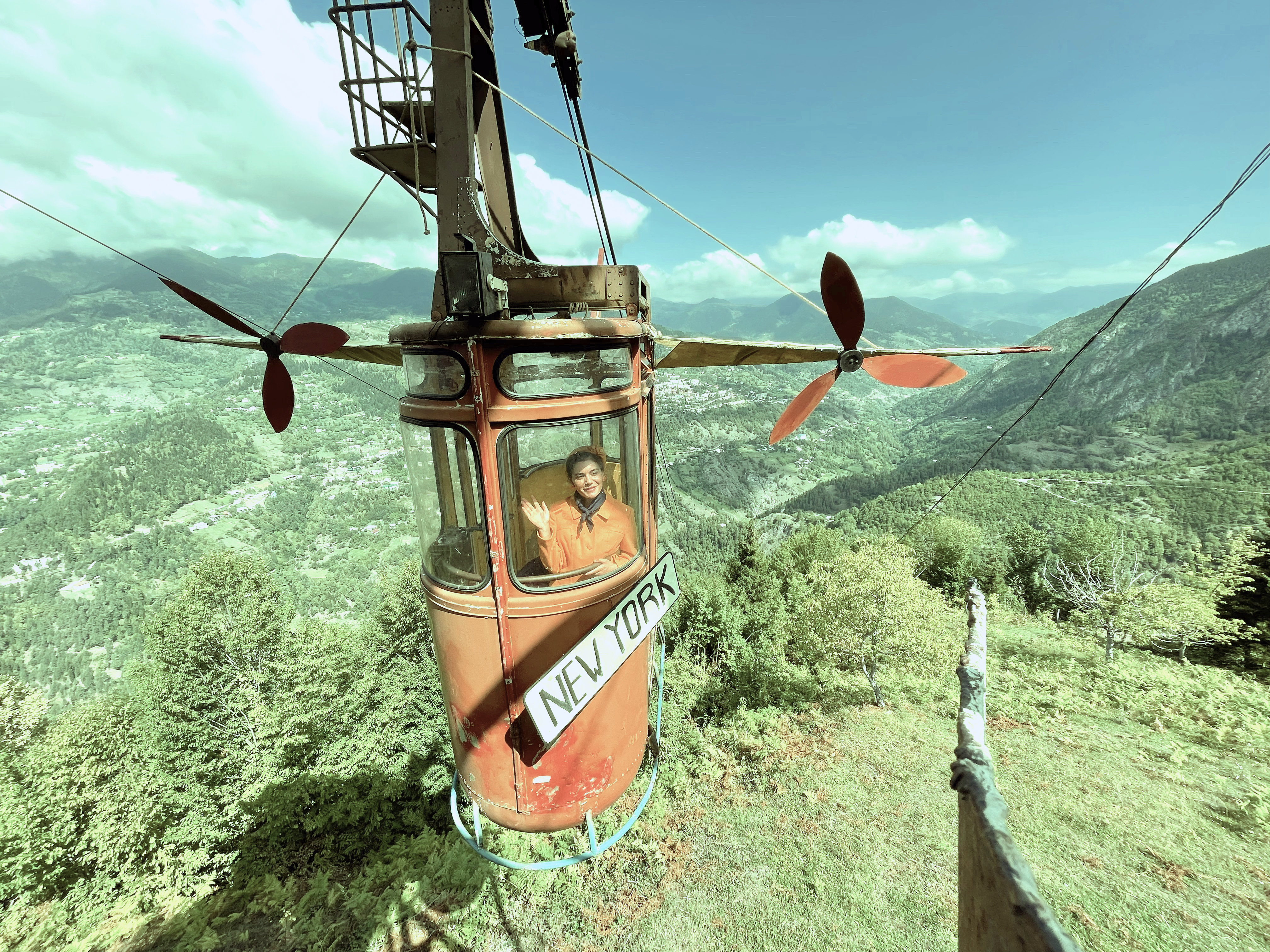
After Nino shows Iva the ropes, the two cable car drivers woo one another in increasingly ingenious ways. Day after day, the young women pass high above a quiet Georgian valley twisted with mist, cherishing each moment of connection. But when sweetness slides into sensuality, where will it send them? A man has died, his coffin carted above the village, and Iva (Mathilde Irrmann) inherits his crooked home and high-flying occupation. At first, villagers treat her with an enigmatic disdain, and she spends her days transporting customers and goods back and forth in disquiet, stealing glances at Nino (Nini Soselia). The flirtation grows as intense as their ongoing chess game, set to the rhythm of the rusted gears and their little kindnesses. Together, they will take on a surly widow (Niara Chichinadze) and lecherous boss (Zuka Papuashvili) as their courtship reaches new heights. Auteur Veit Helmer’s Gondola has the raw intensity of silent cinema and the enchanting whimsy of Amélie. Impelled by its beguiling leads and breathtaking cinematography, the film is a love letter to the countryside and those who live there, and an invitation to let your heart soar.

PosterFeatureVIRTUAL
Out (FR)[COMPETITION]95 minutes

DUTCH • FRENCH ST | Capturing the recklessness of youth and the excitement of newfound sexual liberties in sensuous black-and-white cinematography, Dennis Alink’s Out offers up a vivid and tender tale of being young and gay. Tom (Bas Keizer, in a star-making performance) and Ajani (an effervescent Jefferson Yaw Frempong-Manson) are closeted secondary school sweethearts who yearn for life outside of their small-minded, rural community in the Netherlands. Their solution is Amsterdam, where the queer scene is thriving and they can work at their dreams of becoming filmmakers. Quickly falling into the Dutch capital’s gay nightlife offers the pair some initial thrills: cheeky games of Never Have I Ever, limo rides across the city, eye-opening trips to the bathhouse. But the challenges quickly follow, pushing them to separately question: “Who am I, and where do I fit in?” Recalling such classic monochromatic films about wayward youth as The Last Picture Show and Gus Van Sant’s Mala Noche, Alink and his queer collaborators present a lived-in, piercing portrait that proves coming out isn’t just a pronouncement of one’s sexuality, it’s a simultaneously joyous and heartbreaking journey of self-discovery.

PosterFeatureVIRTUAL
Sweet Angel Baby[COMPETITION]96 minutes

Small towns are no place for secrets. Among the churchgoing folk of a Newfoundland fishing village, Eliza leads a double-life: exploring transgressive photography while managing an unspoken romance with a shunned woman and the insistent advances of a married man. Hearsay only two steps behind. Sneaking around the neighbours, Eliza (Michaela Kurimsky) stages increasingly revealing photoshoots in locations both remote and close to home—perhaps too close. With every new post to her 318K Instagram followers, she imperils the careful balance she’s cultivated between her coexistence with fellow villagers, her burgeoning romance with Toni (Elle-Máijá Tailfeathers), and the married man (Peter Mooney) whose desire for her titillates as much as it terrifies. As a church fundraiser she’s helping to organize approaches, so too does a blaze of gossip, and choices are made that could leave her forever shattered. By turns kinky and kind-hearted, Melanie Oates’ second feature explores our wildest selves with a complexity that continues to deepen through to the final striking frame. All the while, embodying a true sense of place, depicting the rough shores and spirited personalities of one of the most isolated—and spectacular—of Canadian locales.

PosterShort
Panic Attack[A Question of Gender]14 minutes

Alex is in the throes of his transition when his best friend abandons a joint venture to assert their burgeoning identities he’s forced to confront his anxieties before entering the unknown alone.

PosterFeature
Thereafter (Después)[COMPETITION]97 minutes

Jorge is tousled and handsome, seemingly carefree, shouldering changes with cheerful resignation. But after his sudden death, his young mother and best friend, Carmen, is left grief-stricken, forced to reckon with the veracity of her son’s life, including his two lovers—one female, one male—left wondering why he’s ghosted them. At first, Carmen (Ludwika Paleta) refuses all comforts in the wake of her son’s death, cared for, despite her protests, by her kindly queer brother (Darío Rocas). Then, she goes digging. According to Jorge’s estranged father (Luis Velazquez), Jorge (Nicolás Haza) was depressed shortly before he drowned in the sea. Is this true—if so, why? And is this enough to prove his death was intentional? The search for answers will acquaint Carmen with Jorge’s jilted girlfriend (Adriana Palafox) and lovesick boyfriend (Alan Oliva), and reconcile her with a passion for music that hounds her even when she tries to leave it behind. In this expertly crafted tearjerker, writer-director Sofía Gómez-Córdova uses seamless flashbacks and home videos of happier times to reveal who the characters were. And Ludwika Paleta’s blistering performance-of-a-lifetime shows us who Carmen may be in the Thereafter.

PosterShort
All Boys Do[A Question of Gender]14 minutes

A trans drag queen crosses paths with an old flame on the streets of Los Angeles. Over the course of a weekend, the pair act on their unexplored desire for each other.

PosterShort
Legacy of Joe Rose: Queer, Bars and Police Brutality[COMPETITION]4 minutes

A short queer history of violent police raids on queer bars between the 70s and 2000s, and the rise of LGBTQ+ communities fighting back. Tribute to Joe Rose.

PosterShort
Heartbreak[COMPETITION]26 minutes

Albert and Sixten are getting married. Today. The only problem is that if they were completely honest with each other, they shouldn’t even be a couple anymore.

PosterShort
Ephemera[COMPETITION]13 minutes

Robin is a young woman who lives alone above a gas station in North Bay. Every night she watches truckers fill their tanks up and munch on pepperettes. Robin has a secret. Robin is a porn addict. Robin can’t feel anything anymore.

PosterShort
Dreams of Sunlight Through Trees[MADE AU CANADA]16 minutes

A middle aged trans man transitions at 44 and observes his changes over a year and nine months, with a looming ongoing news cycle of anti-trans legislation.

PosterFeature
Gondola[COMPETITION]86 minutes

After Nino shows Iva the ropes, the two cable car drivers woo one another in increasingly ingenious ways. Day after day, the young women pass high above a quiet Georgian valley twisted with mist, cherishing each moment of connection. But when sweetness slides into sensuality, where will it send them? A man has died, his coffin carted above the village, and Iva (Mathilde Irrmann) inherits his crooked home and high-flying occupation. At first, villagers treat her with an enigmatic disdain, and she spends her days transporting customers and goods back and forth in disquiet, stealing glances at Nino (Nini Soselia). The flirtation grows as intense as their ongoing chess game, set to the rhythm of the rusted gears and their little kindnesses. Together, they will take on a surly widow (Niara Chichinadze) and lecherous boss (Zuka Papuashvili) as their courtship reaches new heights. Auteur Veit Helmer’s Gondola has the raw intensity of silent cinema and the enchanting whimsy of Amélie. Impelled by its beguiling leads and breathtaking cinematography, the film is a love letter to the countryside and those who live there, and an invitation to let your heart soar.

PosterFeatureVIRTUAL
Out (FR)[COMPETITION]95 minutes

DUTCH • FRENCH ST | Capturing the recklessness of youth and the excitement of newfound sexual liberties in sensuous black-and-white cinematography, Dennis Alink’s Out offers up a vivid and tender tale of being young and gay. Tom (Bas Keizer, in a star-making performance) and Ajani (an effervescent Jefferson Yaw Frempong-Manson) are closeted secondary school sweethearts who yearn for life outside of their small-minded, rural community in the Netherlands. Their solution is Amsterdam, where the queer scene is thriving and they can work at their dreams of becoming filmmakers. Quickly falling into the Dutch capital’s gay nightlife offers the pair some initial thrills: cheeky games of Never Have I Ever, limo rides across the city, eye-opening trips to the bathhouse. But the challenges quickly follow, pushing them to separately question: “Who am I, and where do I fit in?” Recalling such classic monochromatic films about wayward youth as The Last Picture Show and Gus Van Sant’s Mala Noche, Alink and his queer collaborators present a lived-in, piercing portrait that proves coming out isn’t just a pronouncement of one’s sexuality, it’s a simultaneously joyous and heartbreaking journey of self-discovery.

PosterFeatureVIRTUAL
Sweet Angel Baby[COMPETITION]96 minutes

Small towns are no place for secrets. Among the churchgoing folk of a Newfoundland fishing village, Eliza leads a double-life: exploring transgressive photography while managing an unspoken romance with a shunned woman and the insistent advances of a married man. Hearsay only two steps behind. Sneaking around the neighbours, Eliza (Michaela Kurimsky) stages increasingly revealing photoshoots in locations both remote and close to home—perhaps too close. With every new post to her 318K Instagram followers, she imperils the careful balance she’s cultivated between her coexistence with fellow villagers, her burgeoning romance with Toni (Elle-Máijá Tailfeathers), and the married man (Peter Mooney) whose desire for her titillates as much as it terrifies. As a church fundraiser she’s helping to organize approaches, so too does a blaze of gossip, and choices are made that could leave her forever shattered. By turns kinky and kind-hearted, Melanie Oates’ second feature explores our wildest selves with a complexity that continues to deepen through to the final striking frame. All the while, embodying a true sense of place, depicting the rough shores and spirited personalities of one of the most isolated—and spectacular—of Canadian locales.

PosterShort
Panic Attack[A Question of Gender]14 minutes

Alex is in the throes of his transition when his best friend abandons a joint venture to assert their burgeoning identities he’s forced to confront his anxieties before entering the unknown alone.

PosterFeature
Thereafter (Después)[COMPETITION]97 minutes

Jorge is tousled and handsome, seemingly carefree, shouldering changes with cheerful resignation. But after his sudden death, his young mother and best friend, Carmen, is left grief-stricken, forced to reckon with the veracity of her son’s life, including his two lovers—one female, one male—left wondering why he’s ghosted them. At first, Carmen (Ludwika Paleta) refuses all comforts in the wake of her son’s death, cared for, despite her protests, by her kindly queer brother (Darío Rocas). Then, she goes digging. According to Jorge’s estranged father (Luis Velazquez), Jorge (Nicolás Haza) was depressed shortly before he drowned in the sea. Is this true—if so, why? And is this enough to prove his death was intentional? The search for answers will acquaint Carmen with Jorge’s jilted girlfriend (Adriana Palafox) and lovesick boyfriend (Alan Oliva), and reconcile her with a passion for music that hounds her even when she tries to leave it behind. In this expertly crafted tearjerker, writer-director Sofía Gómez-Córdova uses seamless flashbacks and home videos of happier times to reveal who the characters were. And Ludwika Paleta’s blistering performance-of-a-lifetime shows us who Carmen may be in the Thereafter.

PosterShort
All Boys Do[A Question of Gender]14 minutes

A trans drag queen crosses paths with an old flame on the streets of Los Angeles. Over the course of a weekend, the pair act on their unexplored desire for each other.

PosterShort
Legacy of Joe Rose: Queer, Bars and Police Brutality[COMPETITION]4 minutes

A short queer history of violent police raids on queer bars between the 70s and 2000s, and the rise of LGBTQ+ communities fighting back. Tribute to Joe Rose.

PosterShort
Heartbreak[COMPETITION]26 minutes

Albert and Sixten are getting married. Today. The only problem is that if they were completely honest with each other, they shouldn’t even be a couple anymore.

PosterShort
Ephemera[COMPETITION]13 minutes

Robin is a young woman who lives alone above a gas station in North Bay. Every night she watches truckers fill their tanks up and munch on pepperettes. Robin has a secret. Robin is a porn addict. Robin can’t feel anything anymore.